
Capital, Estates and Climate Action
CorporateWhat We Do
The Capital, Estates and Climate Action (CECA) Department is one of five departments within LMETB’s Organisation Support and Development Directorate. As the name suggests, the Department’s work comprises three broad areas: Capital, Estates and Climate Action.
Capital
The Department has responsibility for a wide range of activities ranging from the day-to-day administration and management of all capital and building projects to the management of various capital balances, risk management, budget oversight and control, compliance with statutory approvals and with Department of Education and Youth (DoEY) Technical Guidance Documents (TGDs).
In 2025, LMETB actively managed over €400 million in capital projects, with more than 140 schemes at planning, design and delivery stages across Louth and Meath. Capital expenditure during the year exceeded €23 million.
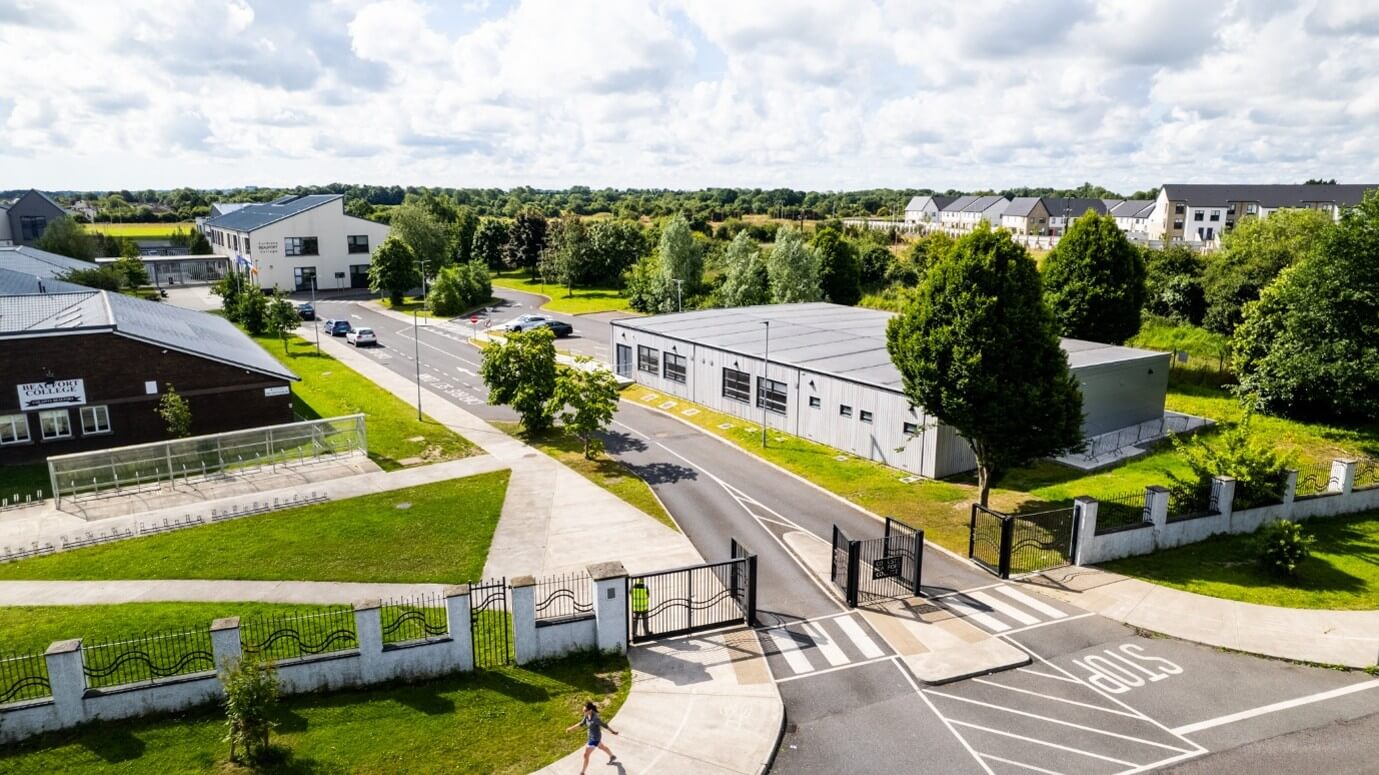
Image credit – CPAC
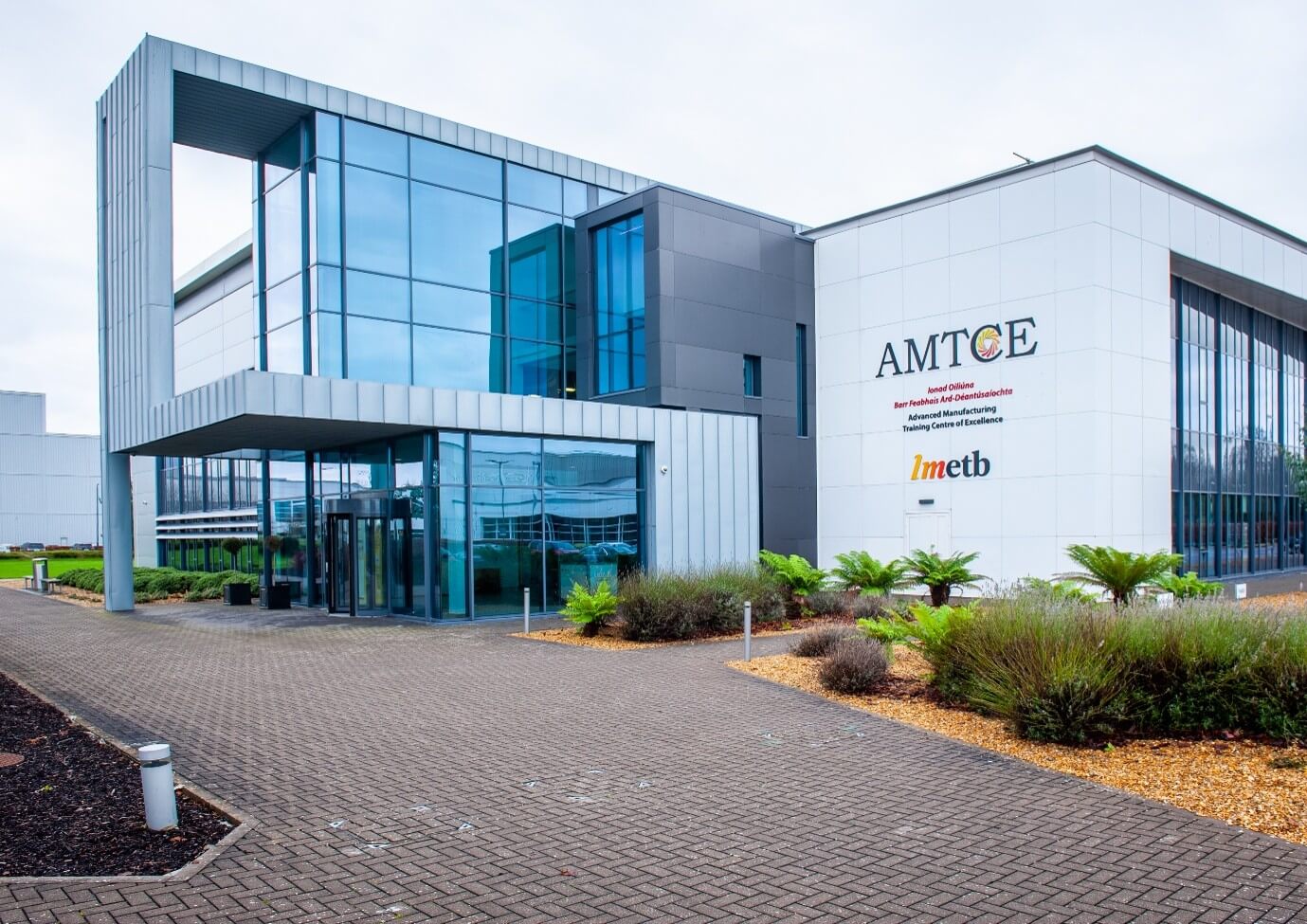
Image Credit – Derek McAuley, Construction Consultant, Drone and Architectural Photographer
Looking ahead, LMETB’s capital programme is set to invest a further €70 million in schools and centres throughout Louth and Meath during 2026, with the continued support of the Department of Education and Youth (DoEY), SOLAS and Department of Further and Higher Education, Research, Innovation and Science (DFHERIS).
This extensive portfolio ensures that LMETB’s schools and centres continue to benefit from modern, sustainable and future focused facilities for students and staff. LMETB was one of two ETBs across the sector requested by DoEY to lead on the delivery of twenty SEN modular projects in 2026.
We are pleased to support the Department in delivering these critically important projects, which will ensure that children with additional needs are provided with high quality integrated and inclusive accommodation. We also continue to support both the Department and the NCSE in the SEN reconfiguration of accommodation across many LMETB schools.
LMETB also continues to support non-ETB schools. at the Department’s request and is pleased to be in a position to assist in delivering these important projects.
This cross sectoral support reflects the Directorate’s strong expertise in project delivery and its commitment to contributing to the wider national educational infrastructure.
The Directorate also leads on the equipping of schools with loose furniture and equipment, ensuring that all educational facilities are furnished and resourced to the highest standard. This represents a significant multi-million-euro programme in its own right and complements the Directorate’s broader work in delivering high quality, future focused learning environments.
A key aspect of the Directorate’s role is its ongoing engagement with the communities it serves. We work closely with board, committees, boards of management, funders, teachers, principals, contractors, consultants and wider stakeholders to ensure that facilities are developed and improved in a manner that reflects local needs and strategic priorities. We remain committed to engaging with stakeholders at all levels as we progress the implementation of our ambitious goals and actions.
Reporting to the Director of OSD and the Chief Executive, our remit spans the full lifecycle of a building project from the initial application to the relevant Government Department/SOLAS through all five stages as set out by our parent department – Stage 1 Submissions/Reports, Stage 2 Preliminary Design, Stage 2a Developed Design, Stage 2b Detailed Design, Stage 3 Tender Action, Stage 4 Construction, Stage 5 Handover and Final Account.
The Team liaise with key stakeholders including, but not limited to, DoEY, DFHERIS, SOLAS, the LMETB Board, school patrons and relevant professionals (including architects, quantity surveyors, engineers, contractors), statutory bodies and auditors. The Capital, Estates and Climate Action Department ensures that its work is in compliance with the Public Spending Code and with EU procurement rules.
We also ensure that all necessary statutory approvals are in place and that our projects adhere to DoEY’s latest technical guidance, including Design Team procedures. Essentially, we oversee the design, procurement and delivery of state-of-the-art education and training buildings from start to turnkey finish. We pride ourselves on delivering 5-star education and training buildings for our learners on time and on budget.
Financial management and governance of capital projects is a mammoth task and includes monitoring and maintaining up to date records of capital payments, originating, preparing, issuing and tracking capital reports, ensuring paperwork relating to ongoing projects is up to date.
The Team also ensures that all funding is requested on time from DoEY/DFHERIS/SOLAS, ensuring certificates of payment are received, reviewed, approved and paid on time with Department of Education and Youth /SOLAS approval. The team also monitors cash-flow and ensures that projects are kept within budget.
All of our capital projects are subject to the requirements of the Public Spending Code, audited by the Internal Audit Unit (IAU) and the Comptroller & Auditor General (C&AG) as well as DoEY individual project audits. We are pleased to have received a clean certificate of audit from the C&AG for 2024.
The Capital, Estates and Climate Action Department has responsibility for all capital procurements within LMETB. This consists of tendering for consultants and contractors in line with DoEY guidelines and national and EU procurement rules and regulations. We use the DoEY and Capital Works Management Framework (CWMF) suite of documents which have been developed to ensure that the key objectives (i.e. more efficient delivery of projects, better value for money and greater cost certainty at tender stage) of the Government’s decision of 4 May 2004 (S29837) in relation to public sector construction procurement reform are achieved.
During 2025 LMETB advertised 62 separate competitions for Architects, Civil and Structural Engineers, Mechanical and Electrical Engineers, Quantity Surveyors, Project Supervisor Design Stage and building contractors and successfully awarded contracts in all cases.
Estates
The Department also plays a strategic role in Estates Management. This involves implementing the aims and goals of our Estates Strategy, modernising facilities, optimising space utilisation, creating inclusive, accessible environments that foster innovation and learning and adapting to changing educational demands. The team oversee and manage all site acquisitions, leases/licences and use of LMETB facilities.
The estates section of the Capital, Estates and Climate Action Department is responsible for all property and land matters including the acquisition of land, lease/licencing of land or buildings, use of facilities and all matters in relation to property title deeds.
In 2025 LMETB had 98 premises in its ownership or under its control at a total annual rent of over €2.5 million. Of these, 24 are owned, 24 leased, 36 licenced, and 14 were in use by LMETB under other agreements. The following services are provided from those premises: 2 administration, 4 Community National Schools, 1 Community Special School, 1 Centre for European Schooling, 19 Second Level Schools, 8 Youthreach centres, 14 Further Education and Training (FET) centres and 1 Advanced Manufacturing and Training Centre of Excellence.
LMETB wishes to support the social fabric of community life, assist with the implementation of the Government’s Climate Action Plan, and support an active and healthy lifestyle for communities by facilitating community access to local schools/centres. LMETB will strive to facilitate such access as far possible consistent with its overall priority of delivering education and training.
LMETB has policies and procedures in place to facilitate this. Requests for use of school/centre facilities are made by completing the LMETB application form and submitting it to the School Principal or FET Centre Co-ordinator.
Climate Action
Climate Action is a key focus of the Department. Implementing energy-efficient practices, reducing the environmental impact of buildings and promoting sustainable construction methods are integral to our operations. This not only helps in reducing operational costs but also aligns with broader LMETB, Department and National and EU Climate Action targets.
One of the five strategic goals under LMETB’s Strategy for 2022 to 2026 is to act sustainably, in a way that is consistent with a sustainable future and consistent with Ireland’s Climate Action Plan. This strategy is supported by six actions:
- To develop an LMETB sustainability policy consistent with UN targets and Ireland’s Climate Action Plan, including the specific targets set under that plan for LMETB
- Engage with staff on implementation of LMETB’s Sustainability Policy to enable them to contribute to LMETB’s sustainability objectives
- Engage with learners on implementation of LMETB’s Sustainability Policy to enable them to contribute to LMETB’s sustainability objectives
- Develop partnerships, including with SEAI, which can contribute to LMETB’s sustainability objectives
- Ensure that LMETB property is managed in a sustainable manner in line with LMETB’s Sustainability Policy
- Reduce LMETB’s environmental impact in line with LMETB’s Sustainability Policy
Under the Climate Action Mandate as part of Climate Action Plan, which applies to public sector organisations, LMETB must prepare a Climate Action Roadmap to report on progress towards achieving the decarbonisation and energy efficiency targets set out in the Climate Action Plan. Overall, the public sector must achieve a 51% reduction in Green House Gas emissions and a 50% improvement in energy efficiency by 2030. Each public sector organisation has been set an individual target by the SEAI for overall GHG emissions reduction from energy. LMETB’s Roadmap is a live document, which will be updated annually or as required, to reflect LMETB’s progress and response to requirements under the Climate Action Mandate.
LMETB is committed to continuous improvement in energy performance and ensures that available resources are allocated to achieving our climate and sustainability objectives and targets. Funding deployed to this area includes Green Capital Devolved Grant for Further Education and Training (FET), Capital Investment programme for FET and capital funding for schools. LMETB will continue to seek out opportunities under relevant government schemes/initiatives to advance this critical agenda.

For more information


LMETB Capital, Estates and Climate Action
LMETB Administrative Office,
Abbey Road, Navan,
Co. Meath, C15 N67E
Tel: 046 901 0034
Email: ceca@lmetb.ie